Collect & care · 3 min read
Stay safe: toxic minerals and field hazards
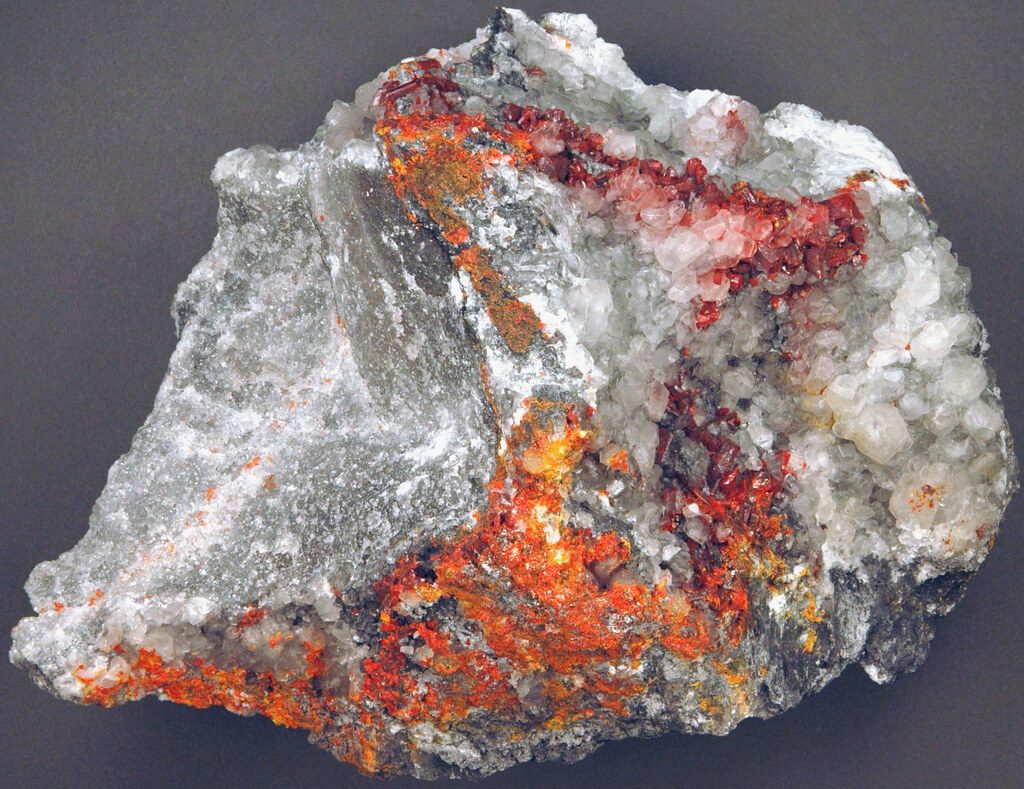
Know the minerals to handle with care
Cinnabar (bright red, mercury) · realgar and orpiment (red-orange and yellow, arsenic) · arsenopyrite (silvery, garlic smell when struck) · galena (heavy silver-gray cubes, lead).
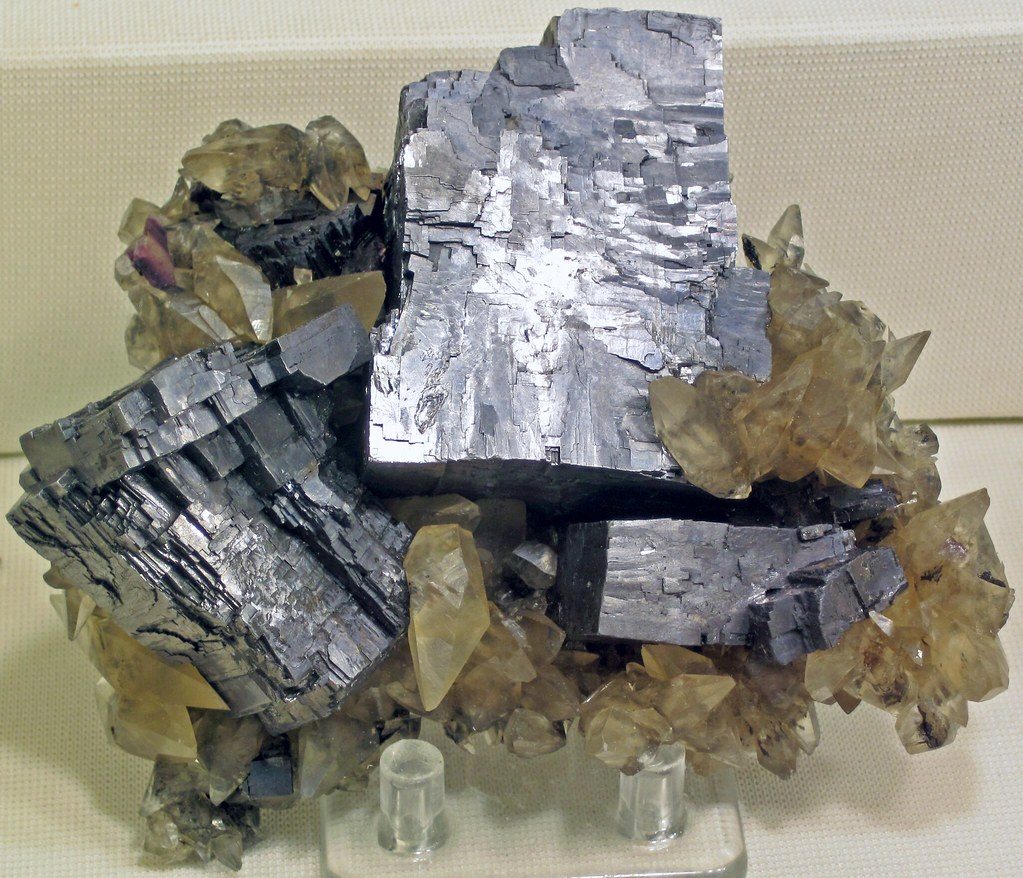
Galena: heavy, silvery and full of lead Don't break fibrous rocks
Asbestos minerals look like hair or cotton fibers. Don't break, crush or carry them in a pocket.
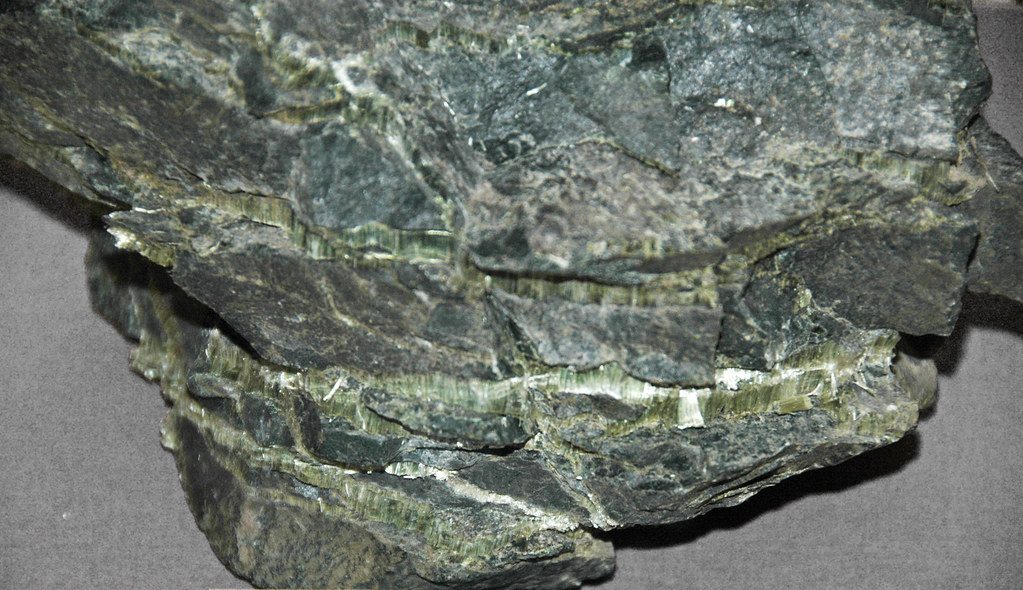
Chrysotile asbestos veins in serpentinite Watch for radioactive minerals
Bright yellow or green flaky minerals like autunite and torbernite contain uranium. Admire them in a museum.
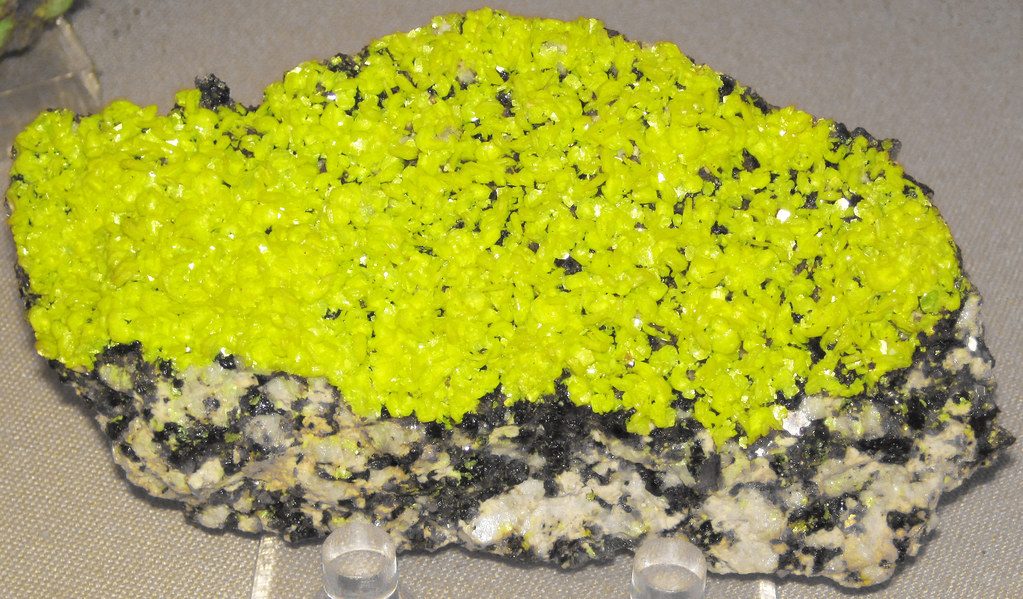
Autunite Keep dust out of your lungs
Cut and polish wet and wear a dust mask. Rock dust, even from quartz and agate, harms your lungs.
Respect the terrain
Check tide times, stay back from the base of cliffs and road cuts, and never enter old mine shafts.
- Use a spray bottle to see a rock's wet color instead of licking it.
- Never make drinks or 'elixirs' with unknown stones.
- Wash your hands after collecting and before eating.
Photos: Realgar & pararealgar & calcite on marble (Middle Eocene mineralization, 39 Ma; Getchell Mine, northern Osgood Mountains, northern Nevada, USA) 1 by James St. John, CC BY 2.0 · Galena-calcite (Annabel Lee Mine, Hardin County, Illinois, USA) by James St. John, CC BY 2.0 · Serpentinite with chrysotile asbestos (Archean; Casper Mountain, Natrona County, Wyoming, USA by James St. John, CC BY 2.0 · Autunite (Lascaux, Haute-Vinne, France) 2 by James St. John, CC BY 2.0. General information only: rules, safety and values vary, so check locally and ask an expert when it matters.