Identify · 4 min read
Real or fake? Dyed, glass and plastic lookalikes
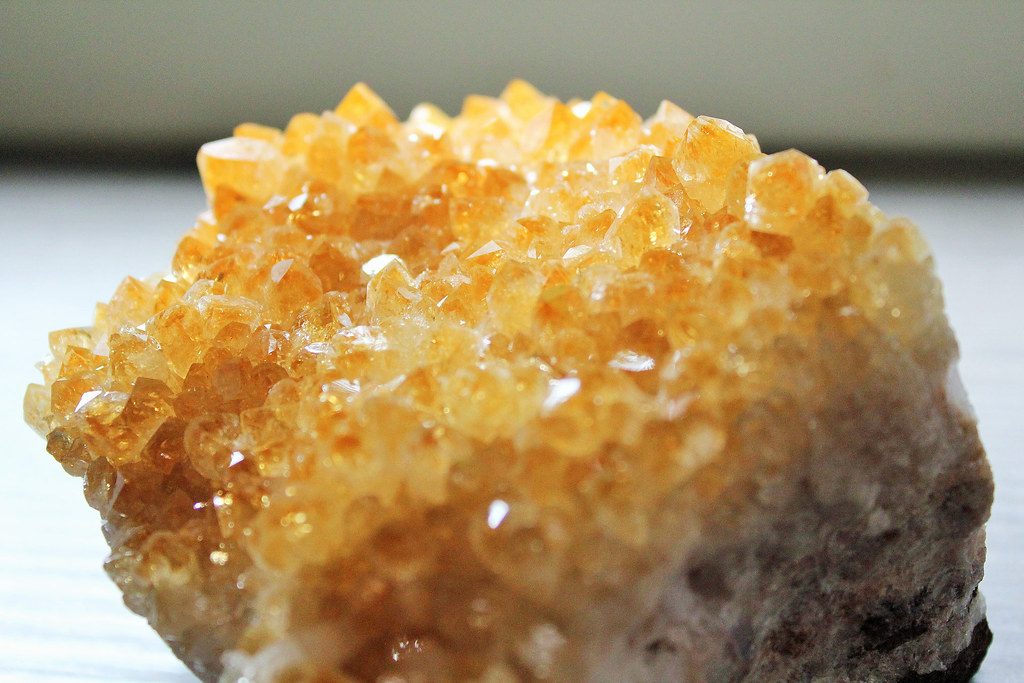
Know the usual suspects
Turquoise is often dyed howlite or magnesite. Much citrine is heat-treated amethyst, burnt orange and darker at the tips. Bright blue, pink or purple agate is almost always dyed. 'Opalite' is man-made glass.
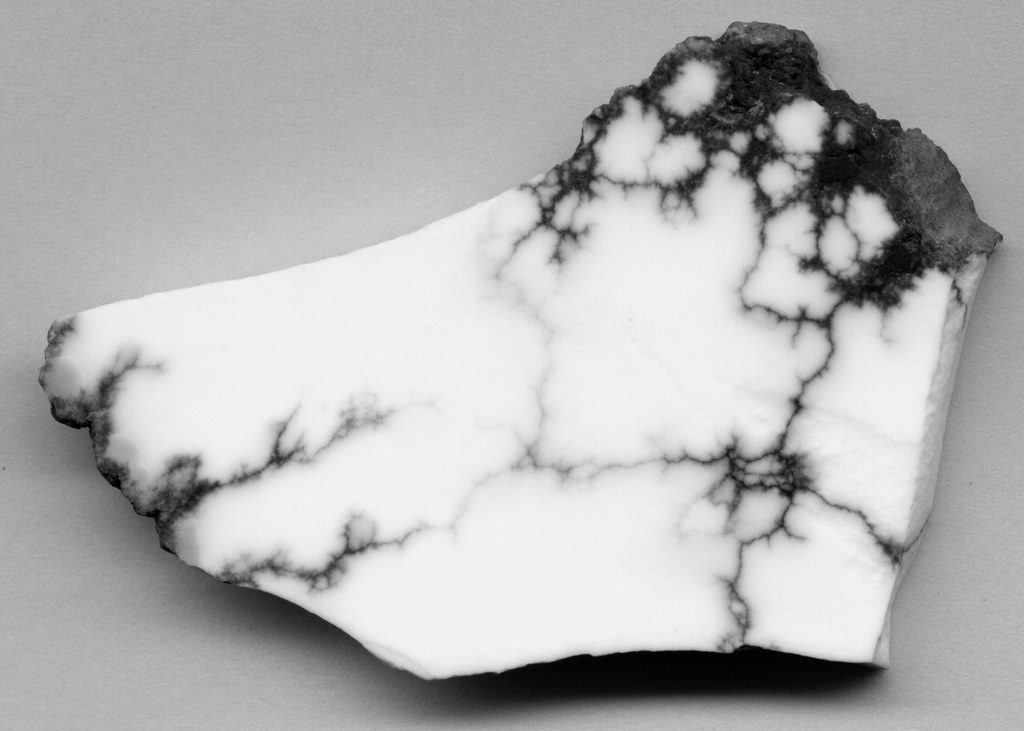
Undyed howlite: dyed blue, it's sold as turquoise Look for dye in the cracks
Dye collects in fractures, veins and pits. A cotton swab with nail polish remover on a hidden spot may pick up color.
Check with a magnifier
Round bubbles and swirls usually mean glass. Natural stones have irregular inclusions.
Feel the temperature
Real quartz feels cool and stays cool longer than glass or plastic. Plastic is also suspiciously light.
Be wary of 'too perfect'
Identical color and shape across a whole bin is a warning sign. So is heat-treated amethyst sold as natural citrine.
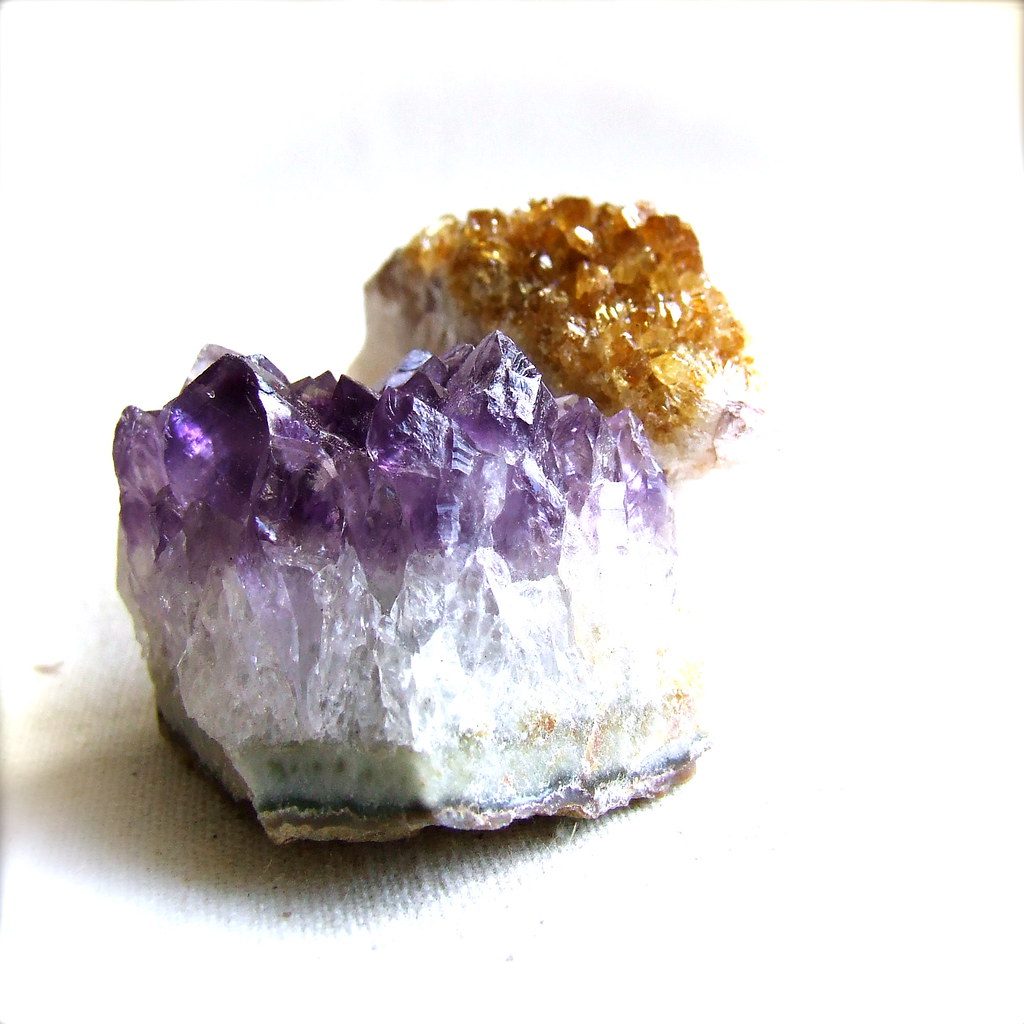
Amethyst next to citrine-colored crystals
- Treated isn't always fake: heating and oiling are common in the gem trade, but a fair seller will tell you.
- When real money is involved, get a report from a qualified gemologist.
Photos: Manifest Money and wealth / Citrine by Angel Lite Photography, Public domain · Howlite by James St. John, CC BY 2.0 · Amethyst druzy chunk, Citrine Geode Raw Stone by balanced.crafts, CC BY 2.0. General information only: rules, safety and values vary, so check locally and ask an expert when it matters.