Identify · 3 min read
Is it an agate?
Know what you're looking for
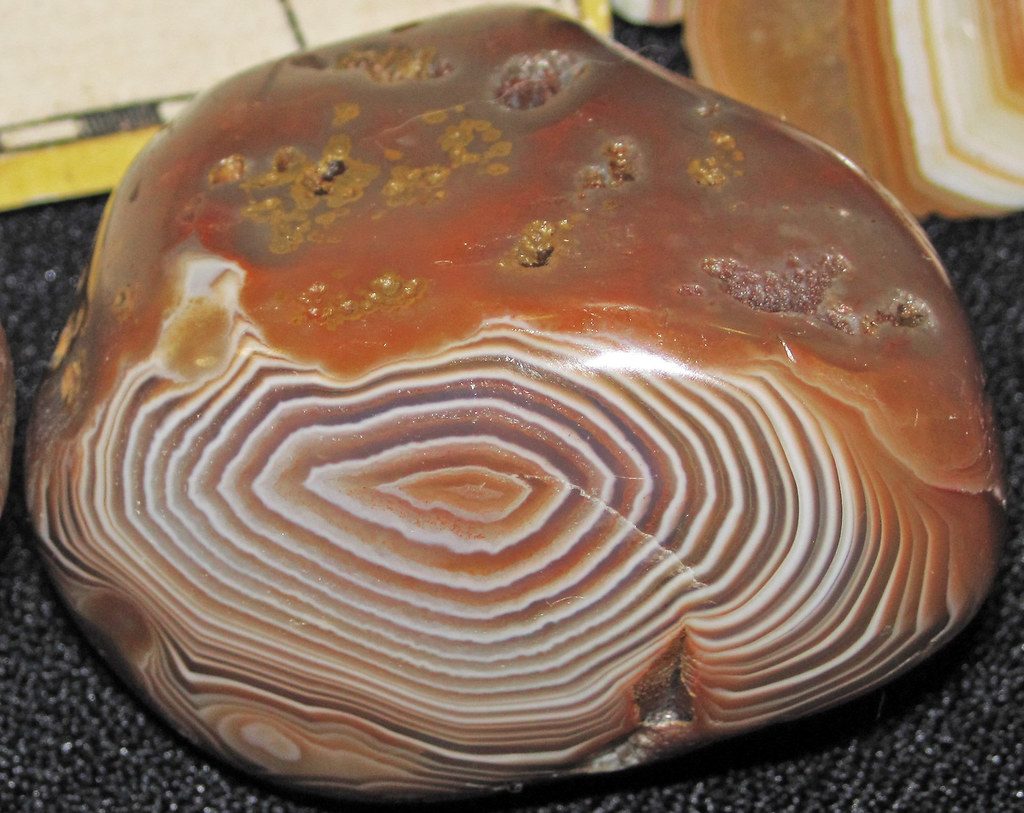
Agate is banded chalcedony, a very fine-grained quartz. It forms when silica-rich water fills gas pockets in old lava flows, band by band. The lava weathers away and the tough agate ends up in creeks, beaches and gravel.
Backlight it
Press your phone's flashlight against the back of the stone. Light glowing through the edges is the best single sign of agate or chalcedony.
Wet it and look for bands
Spray it with water. Look for concentric bands or rings and a waxy shine. Bands often show best on a broken face.
Check the breaks and skin
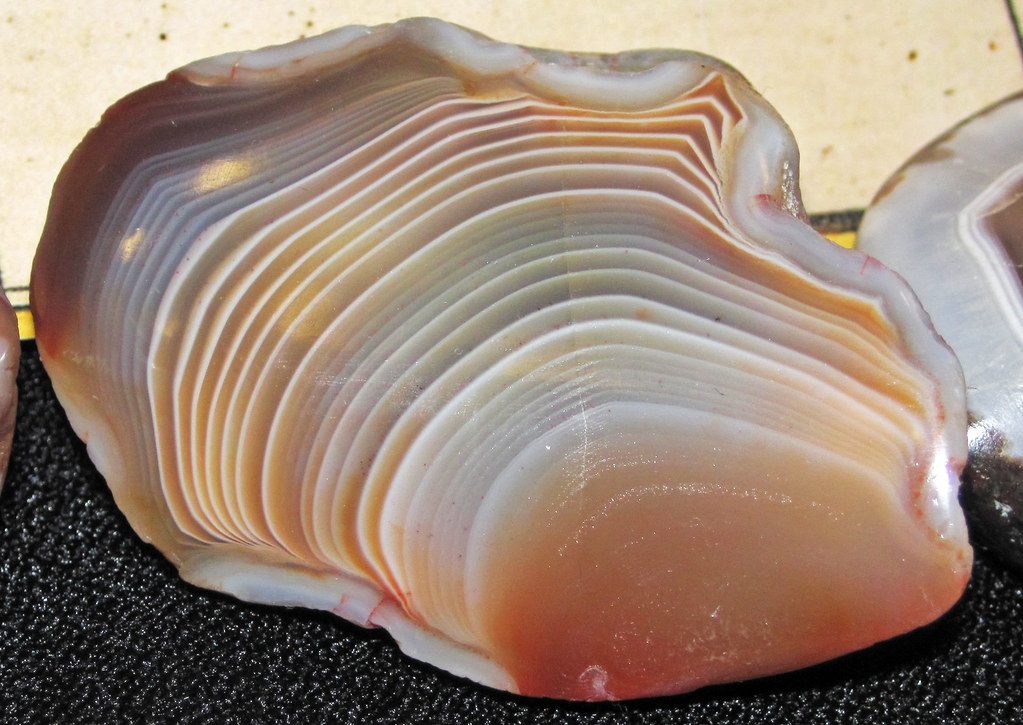
Agate breaks with smooth, shell-like (conchoidal) curves and sharp edges. River and beach agates often have a pitted, orange-peel skin.
Try a scratch
Agate is about 7 on the hardness scale, so it scratches glass easily. If a steel knife marks it, it isn't agate.
Rule out the lookalikes
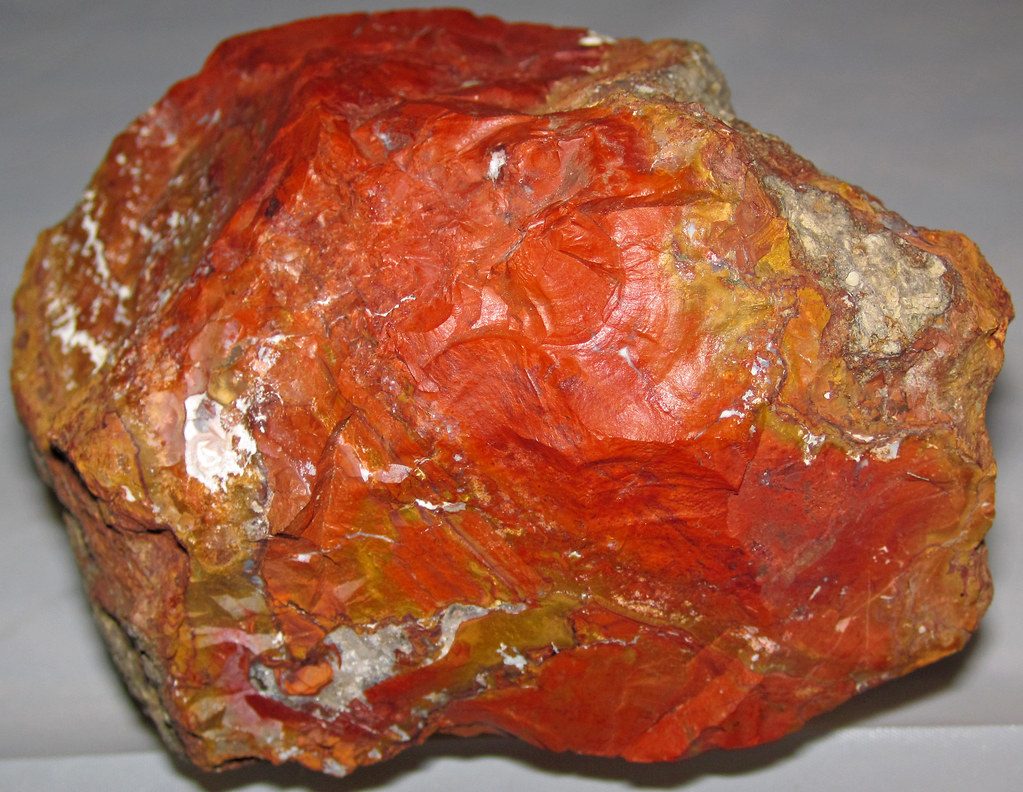
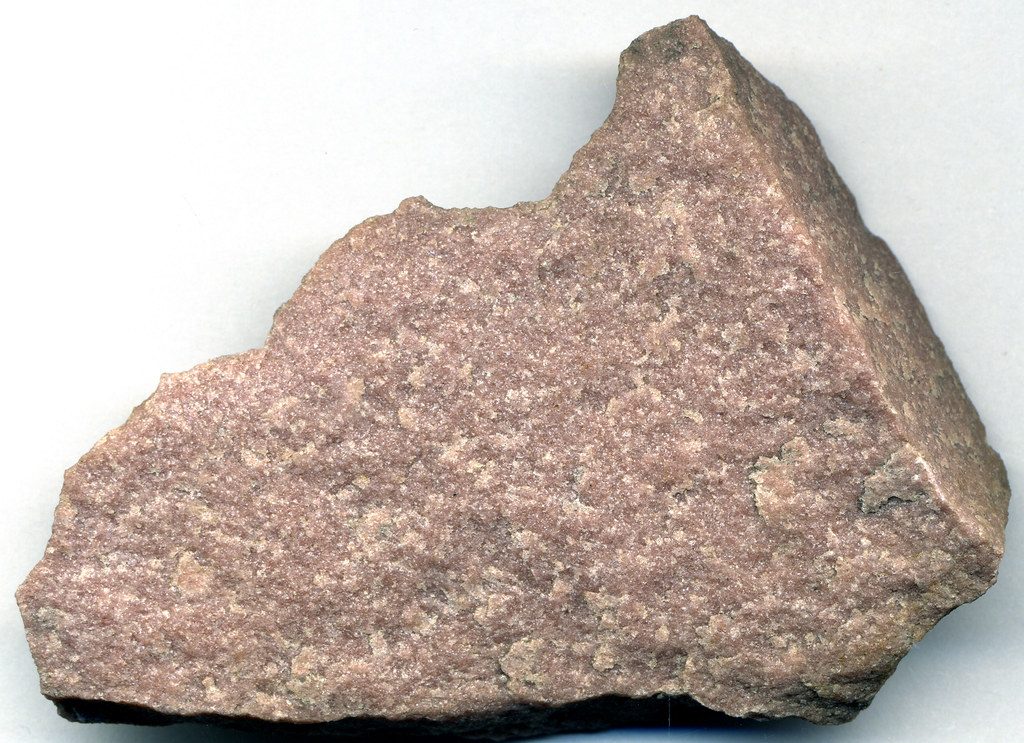
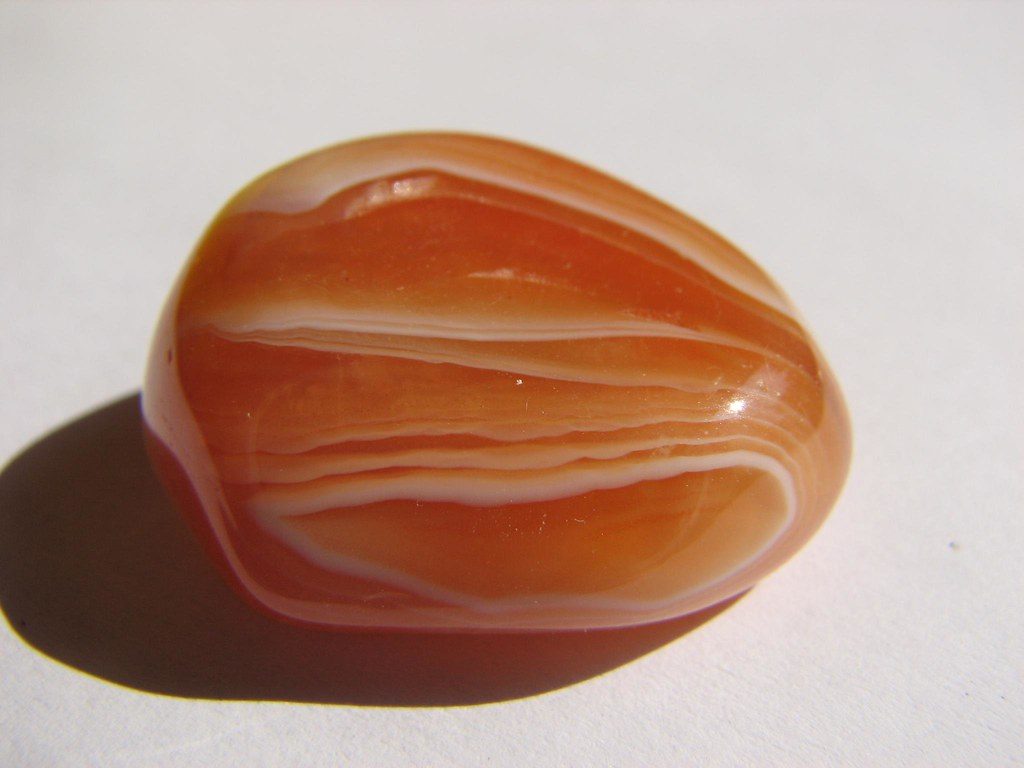
Jasper and chert are just as hard but opaque: light won't pass through. Quartzite looks grainy and sugary up close. Carnelian is translucent orange chalcedony without clear bands, and still a great keeper.
Don't confuse it with
- Walk toward the sun: translucent agates light up while ordinary rocks stay dark.
- Search wet gravel right after rain, high water or winter storms.
Photos: Agate nodule ('Lake Superior Agate') (Jo Daviess County, Illinois, USA) 15 by James St. John, CC BY 2.0 · Agate nodule ('Lake Superior Agate') (Jo Daviess County, Illinois, USA) 12 by James St. John, CC BY 2.0 · Ferruginous chert ('jasper') by James St. John, CC BY 2.0 · Quartzite (Sioux Quartzite, Paleoproterozoic, 1.65 to 1.70 Ga; city of Sioux Falls, Transcontinental Arch, southeastern South Dakota, USA) by James St. John, CC BY 2.0 · Carnelian by jaja_1985, CC BY 2.0. General information only: rules, safety and values vary, so check locally and ask an expert when it matters.