Identify · 4 min read
7 field tests with what's in your pocket
Rinse it
Dry rocks all look gray. Water shows the real color, bands and shine. Use a spray bottle instead of licking stones: some minerals are toxic.
Backlight it
Press your flashlight against the back. If light glows through the edges, think agate, chalcedony, quartz or sea glass. If it stays dark, think jasper, chert or basalt.
Streak it
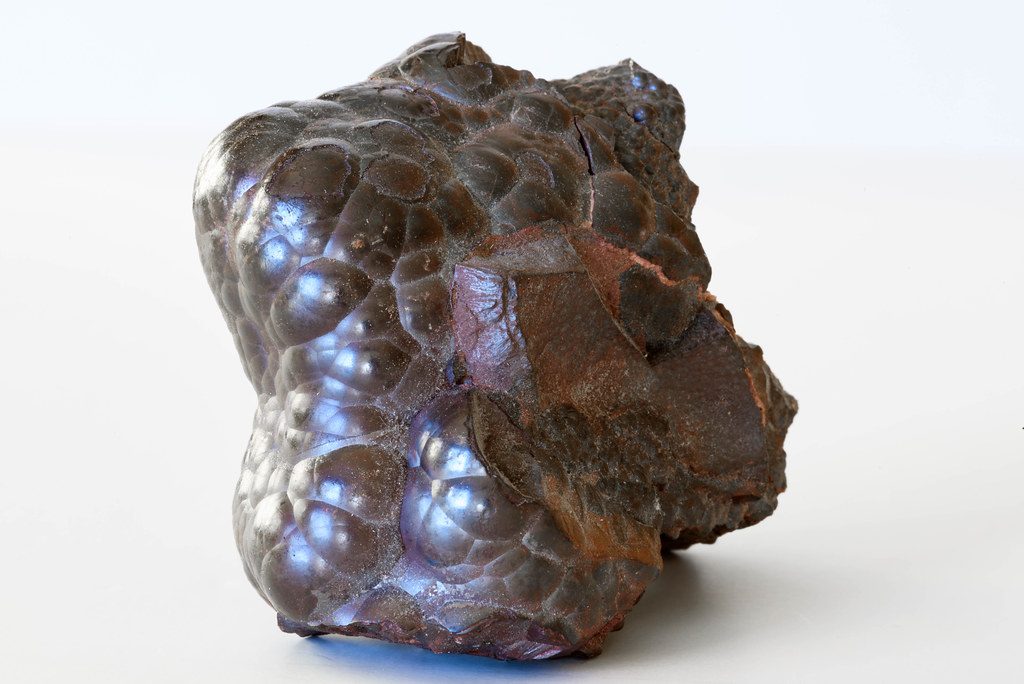
Rub it hard across the unglazed back of a tile. Red-brown powder means hematite, black means magnetite, greenish-black from a brassy rock means pyrite, not gold. No streak means the rock is harder than the tile.
Scratch test
Try to scratch glass or a steel nail (about 5.5). Quartz, agate, jasper and chert scratch glass. Calcite, limestone, marble and most fossils don't.
Magnet
A small magnet on a string sticks to magnetite and most meteorites, and tugs weakly on some iron-rich rocks. Most rocks ignore it.
Heft
Compare it with an ordinary rock the same size. Surprisingly heavy can mean metal ore or, rarely, a meteorite. Surprisingly light can mean pumice, slag or plastic.
Fizz test
A drop of white vinegar fizzes on calcite, limestone and many shell fossils. Skip it on anything you want to keep pristine.
- Tap the rock in Rarestone first, then use the check it suggests to confirm.
- Don't taste or lick rocks. Use water to see the wet color.
Photos: Hematite by Mustang Joe, CC0. General information only: rules, safety and values vary, so check locally and ask an expert when it matters.