Collect & care · 3 min read
How to clean your finds
Rinse and brush
Rinse in water and scrub with a soft toothbrush. Add a little dish soap for grime.
Soak the stubborn dirt
Soak overnight to loosen caked dirt, then work crevices with a wooden toothpick or dental pick.
Know what not to use
Never use acid or vinegar on calcite, limestone, marble, malachite, pearls, shells or most fossils. It dissolves them. Don't soak halite (rock salt) or other soft, soluble minerals; brush them dry.
Dry slowly
Let stones dry at room temperature. Sudden heat can crack them.
Bring out the color (optional)
A thin coat of mineral oil makes a dry-looking stone look wet. Some collectors prefer to leave specimens natural.
- Rust removers with oxalic acid work on iron-stained quartz but are poisonous: gloves, ventilation, and follow the label.
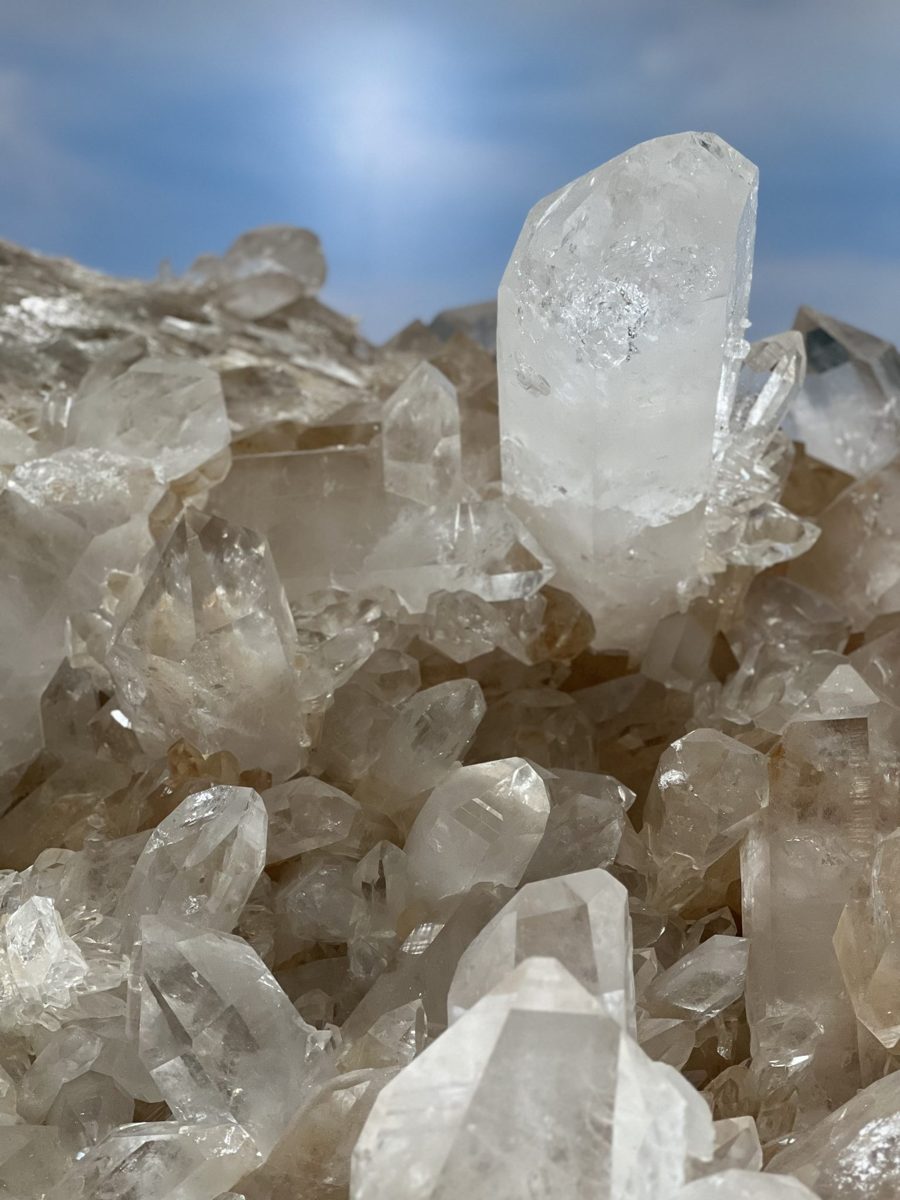
Photos: Large quartz crystal cluster with sharp, transparent points rising from the base, displayed against a sky-blue backdrop at the National Museum of Natural History by Jonathan Desrosiers, CC0. General information only: rules, safety and values vary, so check locally and ask an expert when it matters.